


Infant Craniosacral Therapy Immersion Program for Feeding and Tongue Tie Support: A Gentle, Family Centered Approach

Updated: Oct 5

Why We Created the Infant Immersion Program
The early weeks with a baby can feel intense. Feeding can feel harder than expected. Sleep is unpredictable. Your baby seems uncomfortable, unsettled, or hard to soothe. Many families tell us they feel like they are constantly reacting, trying to figure out what their baby needs while running on very little rest.
The Infant Immersion Program was created with families in mind to provide craniosacral therapy for feeding and tongue tie support. After working with over 1,000 babies, one thing has become very clear; babies do best when care is consistent and close together. Their bodies integrate change quickly, and spacing sessions too far apart often slows progress. Based on what we have learned through years of hands on infant bodywork, we shifted how we serve babies to the Infant Immersion Program. It is designed to provide focused support during an important window of development.
It is a thoughtful sequence of care designed to give babies and parents more support in a shorter window of time, so progress can happen sooner and with less guesswork. You deserve to enjoy this time. Let us help you get there.
What is craniosacral therapy?

Craniosacral therapy is a very gentle, light touch modality that releases tensions and restrictions deep in the body to relieve pain and dysfunction. Babies remain fully clothed and are always supported on a treatment table or in a parent’s arms.
This work focuses on releasing restrictions in the body that can interfere with feeding, digestion, comfort, and calming. When tension patterns soften, babies often:
• Feed more efficiently
• Digest more comfortably
• Settle and calm more easily
• Sleep more soundly
Parents frequently notice changes not just in feeding, but in their baby’s overall ease. One father of twins shared,
Craniosacral treatment with Austin and Kate is an absolute must for every newborn. At first I’d never even heard of craniosacral, but my wife suggested it for our daughter. Austin worked wonders for her - so when we found out we were having twins next I knew we would be taking them to Austin and Kate ASAP....They both had very stiff body cores and persistent head preferences. They would both come home so floppy and relaxed it would almost be hard to hold on to them! I highly recommend getting on Austin and Kate’s schedule asap- you and your babies will be so glad you did.
Why the sequence of sessions matters

On average, families come in for craniosacral therapy about six times. We’ve learned that how those sessions are spaced can make a big difference.
When sessions are spread far apart, babies often need time to re settle between visits. Progress can feel slower, and parents are left wondering what to do next.
The Infant Immersion Program groups care more closely at the beginning, when babies benefit from it most. This allows us to address tension patterns sooner and support the nervous system while changes are still integrating. We also provide additional 45 min or 30 min follow up sessions for families who feel they need additional support after the 3 week package.
Who this is for
This program is especially supportive for families of pre crawling babies who are:
Supporting a baby who struggles to calm or settle
Preparing for a tongue tie release
Navigating feeding challenges with breast or bottle
In a breech or atypical in utero position
Affected by added physical stress during birth
Managing reflux, gas, constipation, or digestive discomfort
Noticing early head turning preference or flat spot

Preparing for a tongue tie release

The tongue tie release itself is only
one part of the process. CST before and after helps ensure your baby has an optimal release, but also the comfort and coordination to use it well.
Before a release, this work helps reduce body tightness and improve coordination so babies are prepared for the procedure. After a release, it supports integration, comfort, smoother feeding transitions, and reduces reattachment.
In a recent 2025 research study on improving tongue tie release outcomes they found,
By addressing both structural restrictions and neuromuscular compensations, this combined treatment approach yields reproducible, durable functional outcomes with fewer complications and high patient satisfaction.
Why we created the Infant Immersion Program
We created this program to:
• Help babies make progress faster
• Reduce waiting time between key sessions
• Lessen decision fatigue for tired parents
• Provide a clear, supportive plan during an overwhelming season
Instead of wondering when to come back or how many sessions are needed, families are guided through a sequence that supports steady change.
What the Infant Immersion Program includes
The structure is intentional and easy to follow. It's a series of six sessions built to help babies make real progress, and just as importantly, to help you feel confident and supported along the way.

Week One
90 minute initial evaluation
Two 60 minute follow up sessions in the same week as the eval
Week Two
Two 60 minute follow up sessions
Week Three
One 60 minute follow up session
This rhythm gives babies the consistency their nervous systems respond to best. Again, we also provide additional 45 min or 30 min follow up sessions for families who feel they need additional support after the 3 week package.
Included in Immersion Program:
The program also includes several add ons designed to support the whole family:
Babywearing fit check
We help families with safe positioning in a babycarrier and with soothing support that helps calm the nervous system. In a 15 minute fit check we will assist families with comfortably and confidently wear one of their baby carriers.
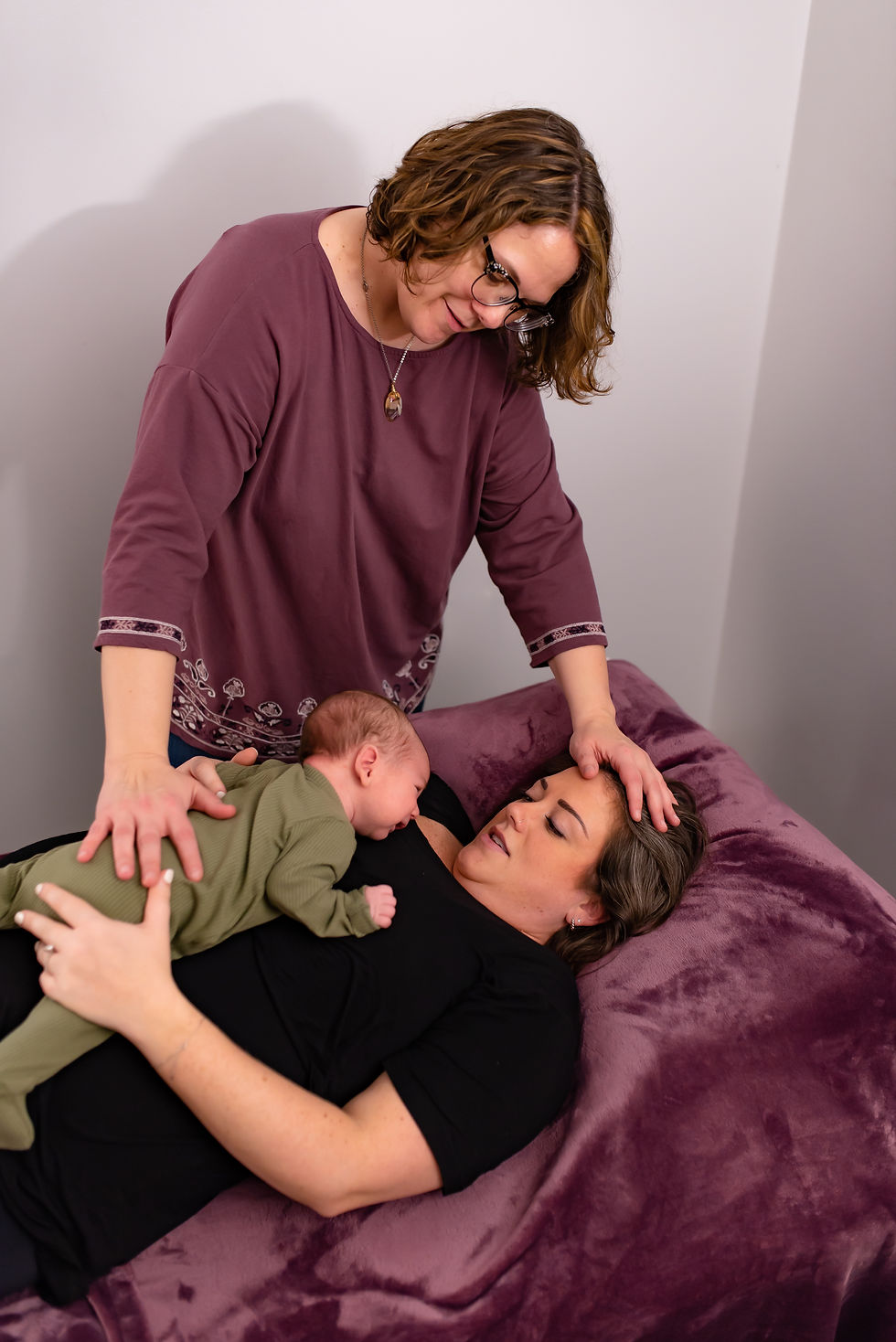
Craniosacral therapy for the caregiver
Parents carry a lot in their bodies, especially during feeding and postpartum recovery. We include a 30 minute caregiver session supports alignment, comfort, and regulation.
Personalized home care plan
Families leave with simple, realistic guidance they can use at home to support the work done in the office. Families learn the TummyTime! Method, an integrated movement sequence that supports calming, posture, and connection. We provide a clear, gentle plan to help your whole family feel more grounded and at ease at home.
It is an investment in your baby, and in your family
We know that committing to six sessions over three weeks is not a small ask. It takes time, intention, and trust. One parent shared it best,
I wish I had known about Nourish and Align the moment things got hard. I had no idea how much the tension in her body was affecting her feeding. I am so grateful our IBCLC pointed us in the right direction because once we started the Immersion Program with Kate, everything started to shift. We finally felt confident calming our baby, feeding became so much more comfortable, and for the first time I got to just enjoy her before returning to work.

That shift, from surviving to thriving, is what this program is designed to create. When you commit to the Infant Immersion Program, we are equally committed to you. We show up ready to meet your baby where they are, address what is getting in the way, and support your whole family in finding more ease. This is not just a series of appointments. It is a focused season of care during one of the most important windows of your baby's development, and yours as a parent.
A family centered space

Before the Immersion program was created, families would often tell us they wish they could come back the next day because of how supported they feel here. Our space is intentionally calm, and appointments are thoughtfully paced.
Your baby’s comfort matters.
Your nervous system matters.
And your questions are always welcome.
This program was created to give families a place to land, learn, and move forward with more confidence. We now have a more effective way to provide infant craniosacral therapy for feeding and tongue tie support in Baltimore.
We only offer limited Infant Immersion Programs a month to give undivided care to the families we serve. If you’re a parent considering craniosacral therapy, or a local provider sharing this with families you support, we created this offering to make the early weeks feel a little more held.
Austin & Kate


Comments